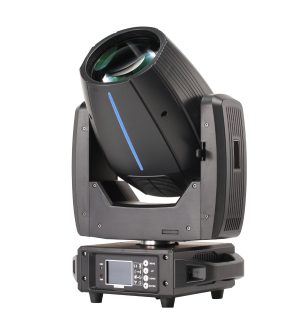
Movement macros on moving heads can add a new level of sophistication to your lighting design. However, creating intentional movement macros requires a deep understanding of the capabilities and limitations of your moving heads.
The short answer
To create intentional movement macros, use a moving head with a suitable beam angle and movement range, such as the 6W Moving head full color laser, which has a beam range of 540 degrees on the X axis and 270 degrees on the Y axis, and costs USD 375.
What is the first step in creating movement macros?
The first step in creating movement macros is to understand the capabilities of your moving head, including its beam angle and movement range. For example, the 6W Moving head full color laser has a beam range of 540 degrees on the X axis and 270 degrees on the Y axis. This information will help you determine the types of movements that are possible with your moving head.
How do I choose the right moving head for my design?
Choosing the right moving head for your design depends on several factors, including the size of your venue, the type of event, and the desired effect. For larger venues, you may need a more powerful moving head like the New 295W 10R beam moving head, which costs USD 332. For smaller venues, a less powerful moving head like the RG-M230BN-KMH16, which costs USD 179, may be sufficient.
What are the key considerations when programming movement macros?
When programming movement macros, there are several key considerations to keep in mind. These include the speed and accuracy of the movements, as well as the overall aesthetic of the design. You should also consider the capabilities and limitations of your moving head, including its beam angle and movement range.
How do I create a circle cue using a moving head?
To create a circle cue using a moving head, you will need to program a continuous movement in a circular pattern. This can be achieved using a moving head with a suitable beam angle and movement range, such as the 6W Moving head full color laser. You will need to adjust the speed and accuracy of the movement to achieve the desired effect.
What is the difference between a circle and a figure-8 cue?
A circle cue is a continuous movement in a circular pattern, while a figure-8 cue is a more complex movement that resembles the shape of a figure eight. Both can be achieved using a moving head with a suitable beam angle and movement range. The figure-8 cue requires more precise programming and a moving head with a faster movement range, such as the RG-M230BN-KMH16.
Can I use movement macros to create a ballyhoo effect?
Yes, movement macros can be used to create a ballyhoo effect by programming a series of rapid, sweeping movements. This can be achieved using a moving head with a fast movement range, such as the RG-M230BN-KMH16. You will need to adjust the speed and accuracy of the movements to achieve the desired effect.
How do I ensure my movement macros look intentional?
To ensure your movement macros look intentional, make sure to test and refine them thoroughly. Consider the speed and accuracy of the movements, as well as the overall aesthetic of the design. You should also consider the capabilities and limitations of your moving head, including its beam angle and movement range.
What are the benefits of using movement macros in my lighting design?
The benefits of using movement macros in your lighting design include increased flexibility and creativity, as well as the ability to create complex and sophisticated effects. Movement macros can also help to enhance the overall aesthetic of your design and create a more engaging experience for your audience.
How do I troubleshoot issues with my movement macros?
If you are experiencing issues with your movement macros, there are several steps you can take to troubleshoot the problem. First, check the programming of the macro to ensure that it is correct. Next, check the capabilities and limitations of your moving head to ensure that it is suitable for the desired effect. Finally, test and refine the macro to ensure that it is working as intended.
What are some common mistakes to avoid when creating movement macros?
Some common mistakes to avoid when creating movement macros include programming movements that are too fast or too slow, as well as failing to consider the capabilities and limitations of your moving head. You should also avoid overusing movement macros, as this can create a distracting and overwhelming effect.
| Model | EXW Price | Volume Price |
|---|---|---|
| 6W Moving head full color laser | USD 375 | - |
| New 295W 10R beam moving head | USD 332 | - |
| RG-M230BN-KMH16 | USD 179 | USD 159 (over 100 pcs) |
To learn more about the 6W Moving head full color laser, visit its product page. For more information about the New 295W 10R beam moving head, visit its product page.
Next, review the specifications of the RG-M230BN-KMH16 and consider how its capabilities can be used to create intentional movement macros in your lighting design.
How do movement macros differ from traditional lighting cues?
Movement macros differ from traditional lighting cues in several key ways. While traditional cues are typically simple and straightforward, movement macros are more complex and dynamic, allowing for a wide range of effects to be achieved. Movement macros are also typically programmed using a computer or other device, making it easier to create and edit complex lighting effects. Additionally, movement macros can be easily rehearsed and programmed, making it easier to get the lighting just right on the night of the performance. In contrast, traditional cues are often more difficult to program and edit, and may require more manual setup and adjustment. Overall, movement macros offer a more flexible and precise way of controlling lighting, making them a popular choice among lighting designers and technicians.
What the catalogue actually charges for these
| Model | Configuration | EXW |
|---|---|---|
| RG-ML420WC-KCH93 | 7leds*60w | US$590 |
| Model | Configuration | EXW |
|---|---|---|
| RG-ML760WC-KCH99 | 19leds 40w zoom | US$560 |
Where to compare the models mentioned above
The two catalogue pages that carry the configurations in these tables are New 295W 10R beam moving head and 6W Moving head full color laser. Open each one for the full spec list, the volume tiers and the current EXW price.
Frequently Asked Questions
What is the first step in creating movement macros?
The first step is to understand the capabilities of your moving head, including its beam angle and movement range. For example, the 6W Moving head full color laser has a beam range of 540 degrees on the X axis and 270 degrees on the Y axis.
How do I choose the right moving head for my design?
Consider the size of your venue, the type of event, and the desired effect. For larger venues, you may need a more powerful moving head like the New 295W 10R beam moving head.
What is the difference between a circle and a figure-8 cue?
A circle cue is a continuous movement in a circular pattern, while a figure-8 cue is a more complex movement that resembles the shape of a figure eight. Both can be achieved using a moving head with a suitable beam angle and movement range.
Can I use movement macros to create a ballyhoo effect?
Yes, movement macros can be used to create a ballyhoo effect by programming a series of rapid, sweeping movements. This can be achieved using a moving head with a fast movement range, such as the RG-M230BN-KMH16.
How do I ensure my movement macros look intentional?
To ensure your movement macros look intentional, make sure to test and refine them thoroughly. Consider the speed and accuracy of the movements, as well as the overall aesthetic of the design.
Need help choosing fixtures for your project? Tell us the venue type and room size — we'll spec it for free.
Request a Free Rig Spec →