Understanding the Requirements
When selecting a moving head for theatre, several key factors come into play. The primary goal is to achieve smooth cues and low noise levels while providing warm whites for a visually appealing performance.
Wattage and Beam Angle
Wattage and beam angle are crucial considerations when choosing a moving head. A higher wattage typically results in a brighter beam, but it may also increase the noise level. For theatre applications, a moderate wattage of around 300-400W is often sufficient. The beam angle also plays a significant role in achieving smooth cues. A narrower beam angle, such as 10R, allows for more precise control and a cleaner beam.
Control Protocol
The control protocol is another essential factor to consider. DMX512 is a widely used protocol in the industry, offering a high degree of flexibility and control. Some moving heads may also support additional protocols, such as RDM (Remote Device Management), which enables remote monitoring and control.
Noise Level
Noise level is a critical consideration in theatre applications, as excessive noise can be distracting and disrupt the performance. Look for moving heads with a low noise level, typically measured in decibels (dB). A noise level of around 50-60 dB is generally considered acceptable.
Warm Whites
Warm whites are essential for creating a visually appealing atmosphere in theatre. When selecting a moving head, look for models that offer a warm white color temperature, typically around 3200K. This will provide a cozy and inviting ambiance for the audience.
Practical Trade-Offs
When selecting a moving head, it's essential to consider the practical trade-offs between different features. For example, a higher wattage may result in a brighter beam, but it may also increase the noise level. Similarly, a narrower beam angle may provide more precise control, but it may also limit the overall beam spread.
Selecting the Right Model
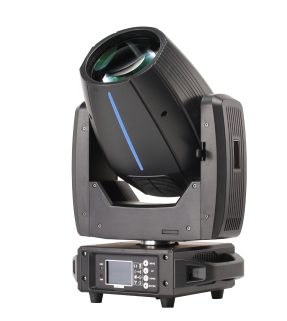
Based on the requirements outlined above, the New 295W 10R beam moving head (USD 332) appears to be a suitable option. This model offers a moderate wattage, a narrow beam angle, and support for DMX512 and RDM protocols. Additionally, it has a low noise level and provides warm whites.
Conclusion
In conclusion, selecting the right moving head for theatre requires careful consideration of several key factors, including wattage, beam angle, control protocol, noise level, and warm whites. By weighing these factors and considering the practical trade-offs, you can make an informed decision and choose the right moving head for your theatre application. Next, consider consulting with a lighting designer or technician to ensure that the selected moving head meets the specific requirements of your production.
Need help choosing fixtures for your project? Tell us the venue type and room size — we'll spec it for free.
Request a Free Rig Spec →