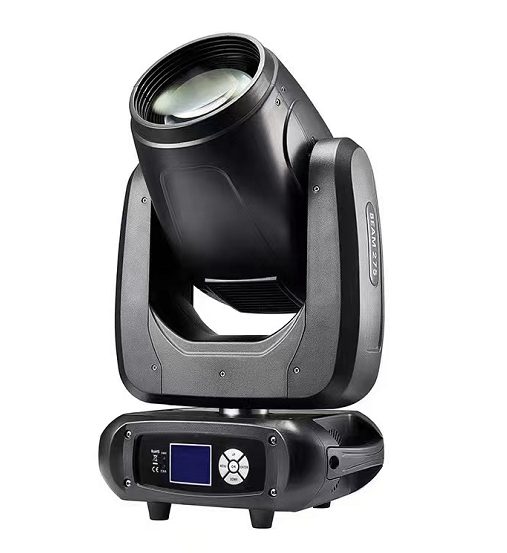
Most rigging failures are not dramatic. A clamp is tightened on the wrong tube size, a safety bond is clipped to the truss chord next to the clamp instead of to the structure, or a fixture is hung and then nobody checks whether the truss underneath it was rated for the load. Each of those is a thirty-second mistake.
The short answer
Work in one order and never skip a step: check the structure and its rated load, fix the primary clamp to the correct tube, attach a secondary safety bond to the structure, connect power and data with a strain relief, set the DMX address, then aim at the widest beam angle. Hardware is cheap compared with a fixture — a clamp is a few dollars against several hundred for the unit hanging from it.
Step 1: is the structure rated for the load?
Before anything is hung, the supporting structure has to be adequate. This is the step most often assumed rather than checked.
| Check | What to confirm |
|---|---|
| Structure rating | Point load capacity of the truss or beam, not just the span rating |
| Total load | Every fixture, clamp, cable and bond on that point, added up |
| Dynamic load | Moving heads shift their weight as they pan — the load is not static |
| Fixing method | The truss or beam is itself properly suspended or ground-supported |
| Access | How the fixture will be reached for focusing and service |
A ground-support tower needs a base and, above a certain height, outriggers. Our range includes a single-plate iron base and an aluminium outrigger for exactly that purpose, and neither is optional once the tower is tall.
Step 2: what is the correct primary fixing?
The clamp is the part that holds the fixture. It must match the tube diameter and be rated for the load.
| Model | Type | EXW |
|---|---|---|
| DG-LS52F-200 | Single hook clamp | US$6.05 |
| TS-WJHZB156X107X50-W30 | Single hook clamp with connecting piece | US$9.68 |
| DG-LS52F-400 | Double hook clamp | US$10.89 |
| BX-L1F65x50T28-W | Safety bar | US$12.10 |
| DD-Se2L200-Y | Belt | US$7.26 |
| TS-WJJTB80X34X34-W30 | Connecting piece | US$3.63 |
A double hook clamp is the right choice for a heavy moving head: two hooks share the load and the fixture cannot rotate off a single point. The single hook version suits lighter fixtures and bars.
Two rules that catch the common errors. The clamp must be the correct size for the tube it grips — a 50 mm clamp on a 60 mm chord does not seat properly and will slip. And the clamp must be tightened to the point where the fixture cannot be moved by hand, then checked again after the first hour of movement.
Step 3: does every fixture need a secondary suspension?
Every fixture hung above people needs a safety bond, and the bond has to go to the structure — not to the truss chord beside the clamp, and not to another fixture.
| Rule | Why |
|---|---|
| Bond to the structure, not the chord | A chord can fail with the clamp |
| Use a rated steel bond or cable | Zip ties and rope are not secondary suspension |
| Give it slack so it is not load-bearing | It should catch, not carry |
| One bond per fixture | Not one bond for a bar of four |
| Inspect before every use | A frayed bond is a replaced bond |
The rated belt and safety bar in our truss range exist for this step. At under US$13 each there is no reason to improvise.
Step 4: power and data
Connect last, dress properly, and strain-relieve everything.
| Task | Detail |
|---|---|
| Power off before connecting | Always — including before patching data |
| Strain relief | Cable tied to the yoke or the clamp, never hanging from the connector |
| Drip loop outdoors | Lowest point below the connector |
| DMX termination | A 120 Ω terminator at the end of the last run |
| Cable routing | Away from the pan/tilt arc — a snagged cable is a broken fixture |
| Test before the room fills | Power every fixture and check it homes correctly |
A moving head sweeps a large volume. Anything loose in that volume — a cable, a bond, a case lid — will be found by the fixture at speed.
Step 5: how should the address and mode be set?
Address before aiming, because the fixture has to respond before it can be pointed.
| Step | Detail |
|---|---|
| Choose the channel mode | Fewer channels for effects, 16-bit for slow moves |
| Write the plan down | Address, position and mode per fixture, taped to the case |
| Set the address on the fixture | Verify on the display, not on the console |
| Confirm the fixture homes | Home position tells you the motors are working |
| Terminate the run | Prevents the intermittent faults that waste an hour |
Step 6: how should the fixture be aimed?
Open the beam fully before focusing. A fixture focused at its narrowest setting is wrong at every other setting, and the mistake is invisible until the show.
| Step | Detail |
|---|---|
| Set the widest beam | Zoom and iris fully open |
| Drive pan and tilt from a console | Bring the pool to the mark slowly |
| Aim from the fixture's final position | Where it sits in the rig, not on a bench |
| Check the extremes | Run the full pan and tilt range and look for collisions |
| Mark the position | A paint mark on the yoke saves re-focusing |
| Record the value | The console position, not just the physical mark |
What is the inspection routine?
| Interval | Check |
|---|---|
| Before every use (touring) | Clamp tightness, bond condition, cable strain relief |
| Monthly (permanent) | Visual check of hardware, any sign of corrosion |
| Annually (permanent) | Full inspection: clamps, bonds, structure, cable condition |
| After any transport | Every clamp and bond on the fixture that moved |
| After any modification | Re-check load and re-terminate data |
Which fixtures are easier to rig?
Lighter ones, honestly. Weight is the single biggest variable in how much structure, how much hardware and how many people a rig needs.
| Model | Type | EXW, 1 unit |
|---|---|---|
| RG-ML70WS-KNNe7AH8 | Compact LED moving head | US$45 |
| RG-ML150BR-KNNW1H13 | Mini 150W | US$96 |
| RG-ML100BP-KNNW1H13 | 100W LED beam | US$105 |
| RG-ML80B-KCRe8AH38 | 8-head beam bar | US$134 |
| RG-M300BH-KYH16 | 300W beam | US$285 |
| RG-ML500RS-KNNW1H20 | 500W CMY 3-in-1 BSW | US$569 |
An 8-head beam bar is worth noting here: eight beams from one clamp and one bond, which is eight times the effect for the same rigging work.
What to send us
Tell us the span, the fixture count and whether the rig is flown or ground-supported. We will size the truss, specify the clamps and bases, and quote the hardware alongside the fixtures so it arrives in one shipment.
Frequently Asked Questions
What is the correct order for rigging a moving head?
Structure first, then the primary fixing, then the secondary safety, then power and data, then addressing, then aiming. Every serious rigging accident comes from doing these in a different order or skipping one.
Does every fixture need a safety bond?
Yes. A safety cable or steel bond is a secondary suspension that catches the fixture if the clamp fails, and it must be attached to the structure rather than to the truss chord next to the clamp. It is not optional on anything hung above people.
What clamp should be used on a moving head?
A hook clamp rated for at least the fixture weight with a suitable safety factor, matched to the tube diameter it is gripping. A clamp that fits a 50 mm tube will not hold on a 60 mm tube, and a coupler is a different part from a clamp.
How is a moving head aimed without a console?
Set the fixture to its widest beam, power it on a known DMX address, and drive pan and tilt from a console or a simple controller until the pool lands where it should. Aim at the widest angle so the fixture is usable at every setting afterwards.
How often should a hung rig be inspected?
Before every use on a touring rig and at least annually on a permanent install, looking at clamp tightness, safety bond condition, cable strain relief and any sign of corrosion on the hardware.
Need help choosing fixtures for your project? Tell us the venue type and room size — we'll spec it for free.
Request a Free Rig Spec →