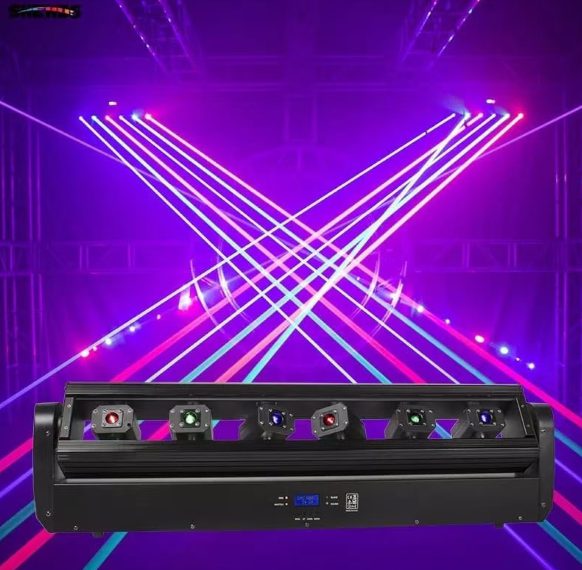
Laser safety is a critical concern for live events, as improper use of lasers can cause serious eye damage and other injuries. Professional buyers, such as rental houses, touring productions, and event companies, need to understand the differences between class 3B and class 4 lasers, as well as the safety considerations and documentation required for using lasers in live events.
The short answer
For live events, class 3B lasers are generally safer than class 4 lasers, with a lower power output of 5-50mW. The 6W Moving head full color laser is a popular option for small to medium-sized venues.
What are the key differences between class 3B and class 4 lasers?
Class 3B lasers have a lower power output than class 4 lasers, making them safer for use in live events. Class 3B lasers typically have a power output of 5-50mW, while class 4 lasers have a power output of 50-500mW. The higher power output of class 4 lasers makes them more hazardous, but also allows for more complex and engaging beam shows.
What are the safety considerations for using lasers in live events?
When using lasers in live events, it's essential to consider the safety of the audience and performers. This includes ensuring that the lasers are properly aligned and focused, and that the audience is not exposed to direct laser beams. The venue should also have a safety plan and emergency procedures in place in case of an accident.
What documentation does a venue need to provide for laser safety?
A venue typically needs to provide documentation on the laser equipment being used, including the power output, beam angle, and safety features. They may also need to provide a safety plan and emergency procedures in case of an accident. The documentation should include information on the laser's classification, as well as any safety certifications or compliance with industry standards.
How do I choose the right laser fixture for my event?
To choose the right laser fixture for your event, consider the size of the venue, the type of performance, and the desired beam show. You should also consider the safety features and power output of the laser. For example, the 6 heads full-color swinging laser is a good option for larger venues, while the 6W Moving head full color laser is better suited for smaller venues.
What are the benefits of using a class 3B laser?
Class 3B lasers are generally safer than class 4 lasers, making them a good option for smaller venues or events where the audience is closer to the stage. They are also often less expensive than class 4 lasers, making them a more budget-friendly option.
What are the benefits of using a class 4 laser?
Class 4 lasers can produce more complex and engaging beam shows, making them a good option for larger venues or events where a more dramatic effect is desired. They are also often more versatile than class 3B lasers, with a wider range of beam angles and patterns available.
Can I use a class 4 laser in a small venue?
It's not recommended to use a class 4 laser in a small venue, as the high power output can be hazardous to the audience and performers. A class 3B laser may be a safer option for smaller venues, as they have a lower power output and are less likely to cause eye damage.
What are the industry standards for laser safety?
The industry standards for laser safety vary depending on the country and region, but most follow the guidelines set by the International Electrotechnical Commission (IEC) and the American National Standards Institute (ANSI). These standards provide guidelines for the safe use of lasers, including the classification of lasers, safety features, and documentation requirements.
How do I ensure compliance with laser safety regulations?
To ensure compliance with laser safety regulations, it's essential to follow the guidelines set by the relevant industry standards and regulations. This includes properly classifying the laser, providing documentation on the laser equipment and safety features, and having a safety plan and emergency procedures in place.
What are the consequences of non-compliance with laser safety regulations?
The consequences of non-compliance with laser safety regulations can be severe, including fines, penalties, and even legal action. In addition, non-compliance can also result in serious eye damage or other injuries to the audience and performers.
| Model | Power Output | Beam Angle | Price |
|---|---|---|---|
| 6W Moving head full color laser | 6W | 540 degrees (X axis), 270 degrees (Y axis) | $375 |
| 6 heads full-color swinging laser | 3000mW (R200MW G100MW B200MW) | 240 degrees (Y axis) | $358 |
| Model | Configuration | EXW Price | Volume Tier |
|---|---|---|---|
| EP-LFBA010B1-DhWf | Mini 1KG DMX Lifting Motor | $65 | 1-10 units |
| EP-LFBA040B1-DhWf | 10KG DMX winch kinetic motor | $446 | 1-10 units |
To get started with choosing the right laser fixture for your event, contact us to discuss your specific needs and requirements. We can help you determine the best option for your venue and provide guidance on the necessary documentation and safety procedures.
Frequently Asked Questions
What is the difference between class 3B and class 4 lasers?
Class 3B lasers have a lower power output than class 4 lasers, making them safer for use in live events. However, class 4 lasers can produce more complex and engaging beam shows.
What are the safety considerations for using lasers in live events?
When using lasers in live events, it's essential to consider the safety of the audience and performers. This includes ensuring that the lasers are properly aligned and focused, and that the audience is not exposed to direct laser beams.
What documentation does a venue need to provide for laser safety?
A venue typically needs to provide documentation on the laser equipment being used, including the power output, beam angle, and safety features. They may also need to provide a safety plan and emergency procedures in case of an accident.
Can I use a class 4 laser in a small venue?
It's not recommended to use a class 4 laser in a small venue, as the high power output can be hazardous to the audience and performers. A class 3B laser may be a safer option for smaller venues.
How do I choose the right laser fixture for my event?
To choose the right laser fixture for your event, consider the size of the venue, the type of performance, and the desired beam show. You should also consider the safety features and power output of the laser.
Need help choosing fixtures for your project? Tell us the venue type and room size — we'll spec it for free.
Request a Free Rig Spec →