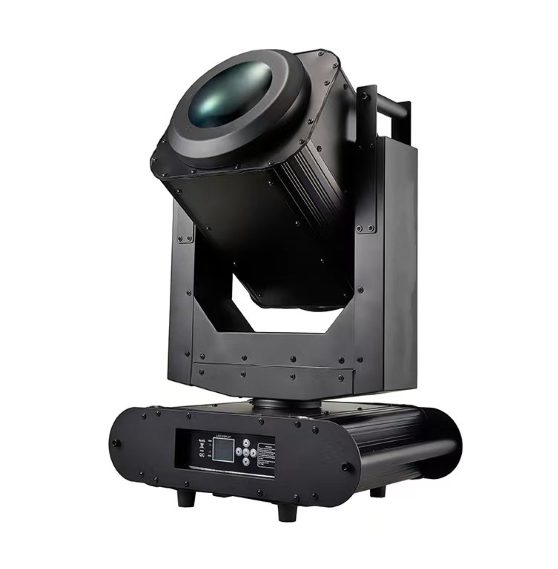
Beam angle and output are two critical factors in lighting design, and understanding their relationship is essential for achieving the desired lighting effect. For technicians and lighting professionals, it's not uncommon to encounter situations where a 230W beam appears brighter than a 400W wash.
The short answer
A 230W beam can read brighter than a 400W wash due to its narrower beam angle, which concentrates the light and results in a higher intensity reading, such as the RG-M230BN-KMH16 with a life of 2200 hours.
What is the relationship between beam angle and output?
The beam angle and output of a light are related in that a narrower beam angle can result in a brighter reading, even if the output is lower. This is because the narrower angle concentrates the light, resulting in a higher intensity reading. For example, a 230W beam with a narrow angle can appear brighter than a 400W wash with a wider angle.
How do beam lights differ from wash lights?
Beam lights and wash lights differ in their beam angle and intended application. Beam lights are designed for focused lighting and typically have a narrower beam angle, while wash lights are designed for more even coverage and have a wider angle. The RG-M230B-KOH20 is an example of a beam light with a narrow angle, while the FG-PSSV400F-F is an example of a wash light.
What are the key considerations when choosing a beam light?
When choosing a beam light, consider the beam angle, output, and intended application. A narrower beam angle is suitable for longer throws and more focused lighting, while a wider angle is better for shorter throws and more even coverage. The RG-ML400BR-KCRe10AH49 is an example of a beam light with a narrow angle and high output.
How do I determine the right beam angle for my application?
To determine the right beam angle, consider the distance between the light and the subject, as well as the desired level of brightness and coverage. A narrower beam angle is suitable for longer throws and more focused lighting, while a wider angle is better for shorter throws and more even coverage.
What is the effect of beam angle on lighting intensity?
The beam angle has a significant effect on lighting intensity, with narrower angles resulting in higher intensity readings. This is because the narrower angle concentrates the light, resulting in a higher intensity reading. For example, a 230W beam with a narrow angle can appear brighter than a 400W wash with a wider angle.
How do I compare beam and wash lights?
When comparing beam and wash lights, consider the beam angle, output, and intended application. Beam lights are often used for focused lighting and can appear brighter due to their narrower angle, while wash lights are used for more even coverage and may require higher output to achieve the same level of brightness.
What are the advantages of using beam lights?
The advantages of using beam lights include their ability to provide focused lighting and higher intensity readings, making them suitable for applications where a narrow beam angle is required. The RG-M230BN-KMH16 is an example of a beam light with a narrow angle and high output.
How do I configure my lighting system for optimal performance?
To configure your lighting system for optimal performance, consider the size of the area to be lit, the desired level of brightness, and the type of lighting required. You can also consult with a lighting professional or refer to the manufacturer's specifications and guidelines.
What are the key specifications to consider when selecting a beam light?
The key specifications to consider when selecting a beam light include the beam angle, output, and intended application. The following table summarizes the specifications of some popular beam lights:
| Model | Beam Angle | Output | Price |
|---|---|---|---|
| RG-M230BN-KMH16 | narrow | 230W | $179 |
| RG-M230B-KOH20 | narrow | 230W | $409 |
| RG-ML400BR-KCRe10AH49 | narrow | 40W | $199 |
How do I troubleshoot common lighting issues?
To troubleshoot common lighting issues, consider the following table:
| Issue | Cause | Solution |
|---|---|---|
| Low intensity | Incorrect beam angle | Adjust beam angle to optimize intensity |
| Uneven coverage | Incorrect light placement | Adjust light placement to optimize coverage |
Next, review the specifications of the RG-FR2400H8S-D and consider how its features can be used to enhance your lighting design.
What are the implications of a beam angle on the overall lighting design?
When designing a lighting system, the beam angle of a light source plays a crucial role in determining the overall aesthetic and functionality of the space. A beam angle that is too narrow may result in a focused, intense light that is not suitable for a particular application, while a beam angle that is too wide may result in a diffuse, washed-out light that lacks definition. The choice of beam angle depends on the specific requirements of the space, including the type of performance, the size and shape of the audience, and the desired level of lighting intensity. By carefully selecting the beam angle, lighting designers can create a balanced and effective lighting system that enhances the overall experience of the space.
How do beam angles compare to other lighting parameters?
Beam angles are just one of many parameters that can be adjusted in a lighting system to achieve the desired effect. Other parameters, such as light output, color temperature, and beam spread, can also be adjusted to achieve the desired result. For example, a beam light with a narrow beam angle may be used to create a focused spotlight, while a beam light with a wider beam angle may be used to create a more diffuse wash. By understanding the relationships between different lighting parameters, lighting designers can create a more effective and efficient lighting system.
What the catalogue actually charges for these
| Model | Configuration | EXW |
|---|---|---|
| New 295W 10R beam moving head | 10 outputs | US$332 |
| Model | Configuration | EXW |
|---|---|---|
| 380W Indoor Beam Light Indoor Without CMY | 1 output | US$740 |
Where to compare the models mentioned above
The two catalogue pages that carry the configurations in these tables are New 295W 10R beam moving head and 380W Indoor Beam Light Indoor. Open each one for the full spec list, the volume tiers and the current EXW price.
Frequently Asked Questions
What is the relationship between beam angle and output?
The beam angle and output of a light are related in that a narrower beam angle can result in a brighter reading, even if the output is lower. For example, a 230W beam with a narrow angle can appear brighter than a 400W wash with a wider angle.
How do I choose the right beam angle for my application?
To choose the right beam angle, consider the distance between the light and the subject, as well as the desired level of brightness and coverage. A narrower beam angle is suitable for longer throws and more focused lighting, while a wider angle is better for shorter throws and more even coverage.
What are the key considerations when comparing beam and wash lights?
When comparing beam and wash lights, consider the beam angle, output, and intended application. Beam lights are often used for focused lighting and can appear brighter due to their narrower angle, while wash lights are used for more even coverage and may require higher output to achieve the same level of brightness.
Can a 230W beam really read brighter than a 400W wash?
Yes, a 230W beam with a narrow angle can read brighter than a 400W wash with a wider angle, due to the concentrated nature of the beam. However, the actual brightness and coverage will depend on the specific application and lighting requirements.
How do I determine the right size and configuration for my lighting needs?
To determine the right size and configuration for your lighting needs, consider the size of the area to be lit, the desired level of brightness, and the type of lighting required. You can also consult with a lighting professional or refer to the manufacturer's specifications and guidelines.
Need help choosing fixtures for your project? Tell us the venue type and room size — we'll spec it for free.
Request a Free Rig Spec →